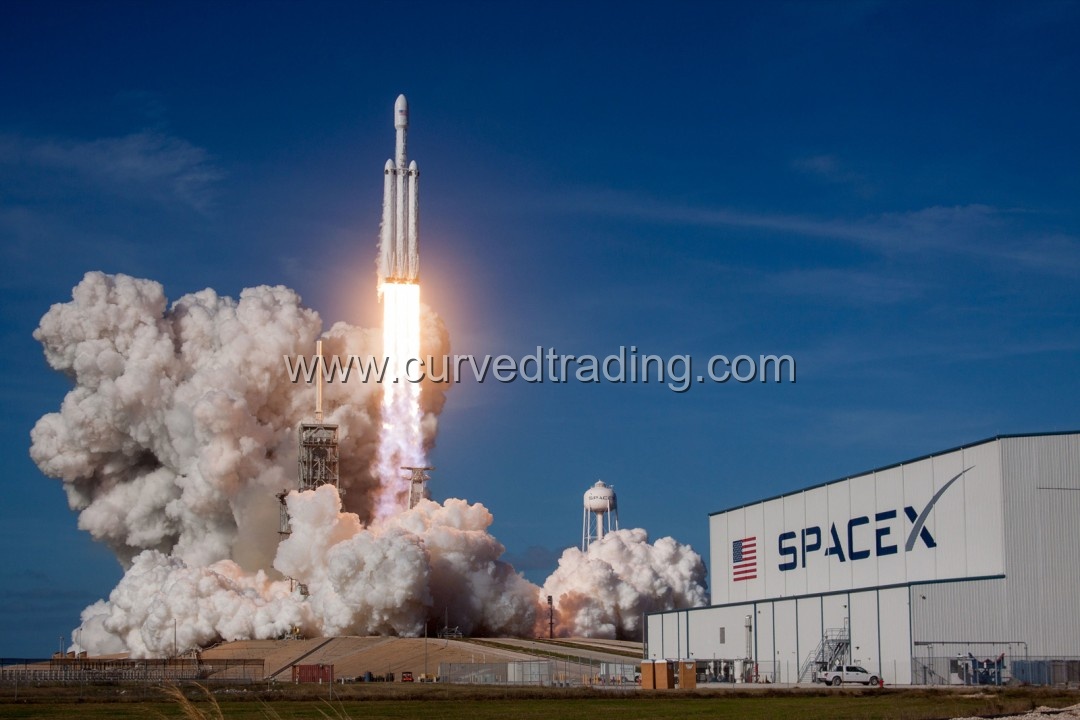
Can You Buy SpaceX Stock?
Elon Musk’s SpaceX has done what almost no private company in history has managed: it has become a household name, a geopolitical force, and a technological phenomenon — all without ever selling a single share to the public. No NASDAQ listing. No ticker symbol. No stock price on your brokerage app.
As of 2026, SpaceX is still a private company. That means retail investors cannot walk into Fidelity, TD Ameritrade, or Robinhood and buy SpaceX stock the way they buy Apple or Tesla. But that does not mean the door is completely closed. It means the door is different — and understanding how it works is the first step to making an informed decision about whether SpaceX deserves a place in your portfolio.
This guide covers everything: what we know about a potential SpaceX IPO, how the current pre-IPO market works, what SpaceX is actually worth, and what real alternatives exist for investors who want exposure to the space economy right now.
Why SpaceX Is Not Publicly Traded
The answer is simple: Elon Musk does not want it to be — at least not yet.
In multiple interviews, Musk has explained that public markets create quarterly earnings pressure that is fundamentally incompatible with long-duration, high-risk space exploration projects. SpaceX’s mission — to make humanity multiplanetary — operates on decade-long timelines. Shareholder activists and quarterly earnings calls would, in Musk’s view, undermine that mission.
SpaceX has also never needed to go public for capital. The company has raised billions in private funding rounds from institutional investors like Google, Fidelity, and a16z, and generates substantial revenue from its Falcon 9 launches, NASA contracts, and the rapidly growing Starlink satellite internet service.
Starlink in particular changes the calculus. Musk has suggested that Starlink could eventually be spun off and taken public separately — as its revenue stream is more predictable and its growth trajectory is easier for public market investors to underwrite. A Starlink IPO would effectively give retail investors partial exposure to SpaceX’s infrastructure business without SpaceX itself going public.
SpaceX Valuation — What Is SpaceX Worth?
SpaceX is one of the most valuable private companies in the world. Based on the most recent secondary market transactions and funding rounds, SpaceX has been valued at over $350 billion as of early 2026, making it one of the most valuable private companies ever.
To put that in context:
- Boeing’s market cap hovers around $100–130 billion
- Lockheed Martin is valued around $110 billion
- Northrop Grumman is approximately $70 billion
SpaceX — a private company — is worth more than all three of its major aerospace competitors combined. That valuation reflects not just its current launch business but the market’s expectation of Starlink’s growth, the Starship program’s commercial potential, and SpaceX’s dominance of the global commercial launch market.

SpaceX IPO — Will It Ever Happen?
This is the question every investor wants answered, and the honest answer is: probably, but not soon — and on SpaceX’s timeline, not the market’s.
Musk has repeatedly said SpaceX will not IPO until after it has achieved a sustainable human presence on Mars. That is a statement of intent, not a filing date. In practical terms, most analysts believe a Starlink spinoff IPO is more likely in the near term (2026–2028 range) than a full SpaceX IPO.
What would trigger a SpaceX IPO:
- A liquidity need that private markets cannot meet (unlikely given current funding)
- Pressure from early investors seeking exits after holding for 15+ years
- A strategic decision that public currency (stock) would be valuable for acquisitions
- Regulatory or political changes requiring public disclosure
Until one of those triggers materializes, SpaceX will likely remain private. The Starlink IPO, when it comes, will be the event that gives retail investors their first real slice of the SpaceX ecosystem.
How to Invest in SpaceX Before the IPO
There are three legitimate pathways for investors who want SpaceX exposure before a public listing.
Path 1 — Pre-IPO Marketplace Platforms
Several platforms have emerged to facilitate secondary market trading of private company shares. These platforms connect accredited investors with existing shareholders — employees and early investors — who want to sell before an IPO.
Platforms that have listed SpaceX shares:
- Forge Global (formerly Sharespost)
- Equityzen
- Hiive
- Linqto
Critical caveats:
- You must be an accredited investor (net worth over $1 million excluding primary residence, or annual income over $200K)
- Minimum investments are typically $10,000–$50,000 or higher
- Shares may be held through a Special Purpose Vehicle (SPV), not directly
- Liquidity is extremely limited — you cannot sell whenever you want
- Valuations on these platforms are based on recent private transactions, not public price discovery
This is not a retail investment — it is a sophisticated, illiquid, high-risk position suitable only for investors who can afford to lock up capital for years with no guaranteed exit.
Path 2 — Invest in SpaceX Through Funds
Several investment funds hold SpaceX shares as part of their portfolio, and some of these funds are accessible to retail investors.
Notable funds with SpaceX exposure:
- Ark Space Exploration ETF (ARKX) — holds SpaceX indirectly through related companies
- Destiny Tech100 (DXYZ) — a closed-end fund that holds SpaceX among other private tech companies; trades publicly on NYSE
- Baron Space Exploration Fund — actively managed fund with private space holdings
The Destiny Tech100 (DXYZ) is the most direct route for retail investors — it trades like a stock and has meaningful SpaceX exposure. However, it frequently trades at a significant premium to its NAV (Net Asset Value), meaning you may be overpaying for the underlying exposure. Research the premium before buying.
Path 3 — Buy Public Companies in the SpaceX Ecosystem
If you want exposure to the space economy without the complexity of pre-IPO investing, several publicly traded companies benefit directly from SpaceX’s growth and the broader space sector:
- Rocket Lab (RKLB) — launch competitor and satellite manufacturer
- Aerojet Rocketdyne (AJRD) — propulsion systems supplier
- Iridium Communications (IRDM) — satellite communications, competes with Starlink
- Maxar Technologies — satellite imagery and services
- Joby Aviation (JOBY) — Musk-adjacent aerospace technology
None of these are SpaceX. But they provide legitimate, liquid exposure to the space economy that SpaceX is helping to build.
SpaceX Stock Symbol — What Will It Be?
Since SpaceX is not publicly traded, there is no current SpaceX ticker symbol. Searches for “SPCE” return Virgin Galactic (now rebranded as Galactic), which is a different company entirely. Do not confuse the two.
When and if SpaceX lists publicly, it will receive a new ticker at that time. Industry speculation has suggested symbols like SPXC, SPCX, or simply SX — but none of these are official or confirmed.
For Starlink specifically, if it spins off as a separate public entity, it would receive its own unique ticker distinct from the parent SpaceX entity.
What to Watch For — SpaceX IPO Signals
If you are waiting for a SpaceX or Starlink IPO, here are the signals that would indicate one is approaching:
S-1 Filing: The most definitive signal. SpaceX would file a registration statement with the SEC before any public offering. This is publicly available at sec.gov the moment it is filed.
Starlink Revenue Disclosure: If SpaceX begins voluntarily reporting Starlink revenue figures publicly, it is likely preparing institutional investors for an eventual IPO of that segment.
Executive Departures: Long-tenured executives sometimes leave before an IPO to clarify equity situations. A wave of senior SpaceX departures could signal pre-IPO restructuring.
Secondary Market Price Surge: Significant price increases on Forge or Equityzen often precede formal IPO announcements as insiders begin positioning.
Set Google alerts for “SpaceX S-1” and “Starlink IPO” — those two queries will tell you everything you need to know the moment something moves.
Should You Invest in SpaceX?
That depends entirely on your financial situation, risk tolerance, and investment horizon.
Reasons the case is compelling:
- SpaceX is the most dominant commercial launch provider in the world with no credible near-term competitor
- Starlink is growing rapidly and has the potential to become a global communications infrastructure business worth hundreds of billions on its own
- The Starship program, if successful, will reduce the cost of getting to orbit by another order of magnitude
- Elon Musk’s track record of building transformative companies, whatever one thinks of him personally, is historically exceptional
Reasons for caution:
- Pre-IPO investing is illiquid, complex, and expensive to access
- SpaceX operates in a capital-intensive industry with long development cycles and frequent setbacks
- Regulatory risk is significant — government contracts can be cancelled, launches can be grounded, and FCC/satellite spectrum fights are ongoing
- The valuation at $350B+ already prices in substantial future success
For most retail investors, the most pragmatic approach is to monitor the Starlink IPO timeline, identify the most direct public proxy (currently DXYZ), and position yourself to act when a filing drops — rather than paying the illiquidity premium in the pre-IPO market today.
Final Thought: Patience Is the Strategy
SpaceX will likely go public eventually. The question is when and at what price. Every major private company that has stayed private for as long as SpaceX — Google, Facebook, Airbnb — eventually reached a moment where public listing became inevitable. SpaceX will too.
Until that moment, the investors who win will be the ones who understood the business deeply, watched the signals patiently, and were positioned to act when the window opened.
That is not a passive strategy. It is a disciplined one.